
Exploring the realm of maintaining a truck fleet in 2025, this introduction aims to captivate readers with a detailed yet intriguing look at the best practices that will shape the future of fleet management.
The following paragraphs will delve into the key aspects of fleet maintenance, incorporating technology, sustainability practices, training and skill development, data-driven strategies, and the benefits of outsourcing maintenance services.
Overview of Maintaining a Truck Fleet
Regular maintenance is essential for the longevity and efficiency of a truck fleet. By adhering to a strict maintenance schedule, fleet managers can prevent breakdowns, reduce repair costs, and ensure the safety of their drivers and goods in transit. Neglecting maintenance can have detrimental effects on fleet operations, leading to unexpected downtime, increased fuel consumption, and even accidents on the road.
Importance of Regular Maintenance
- Regular maintenance helps identify and address potential issues before they escalate, minimizing the risk of costly repairs and breakdowns.
- Well-maintained trucks are more fuel-efficient, saving money on fuel costs and reducing the fleet’s overall carbon footprint.
- Maintaining trucks in optimal condition ensures compliance with safety regulations, protecting both drivers and other road users.
Impact of Poor Maintenance
- Poor maintenance can lead to unexpected breakdowns, causing delays in deliveries and disrupting the overall efficiency of the fleet.
- Unaddressed maintenance issues can result in safety hazards for drivers, passengers, and other road users, increasing the risk of accidents.
- Failure to maintain trucks properly can shorten their lifespan, leading to premature replacements and higher operational costs.
Benefits of Updated Maintenance Practices in 2025
- Adopting advanced maintenance technologies, such as predictive analytics and IoT sensors, can help fleet managers anticipate maintenance needs and plan proactive interventions.
- Utilizing data-driven insights can optimize maintenance schedules, reduce downtime, and improve overall fleet performance and reliability.
- Embracing sustainable maintenance practices, such as eco-friendly fuels and electric vehicles, can align with environmental regulations and reduce the fleet’s carbon footprint.
Incorporating Technology for Maintenance
Technology has revolutionized the way fleet maintenance is managed, with advancements such as IoT and telematics playing a crucial role in ensuring efficient operations.
IoT in Fleet Maintenance
The Internet of Things (IoT) allows for real-time monitoring of vehicle performance and health, enabling proactive maintenance to prevent breakdowns and reduce downtime.
- IoT sensors can track metrics such as engine health, fuel consumption, and tire pressure, providing valuable data for maintenance planning.
- By implementing IoT solutions, fleet managers can schedule maintenance based on actual vehicle usage and condition, optimizing resources and reducing costs.
Telematics for Fleet Management
Telematics systems integrate GPS technology with onboard diagnostics to provide comprehensive insights into vehicle operations and driver behavior.
- Telematics can track vehicle location, route efficiency, and driver performance, allowing for better decision-making in maintenance planning and resource allocation.
- By analyzing telematics data, fleet managers can identify areas for improvement, such as optimizing routes to reduce fuel consumption and wear and tear on vehicles.
Software Solutions for Fleet Maintenance
Various software tools are available to streamline fleet maintenance processes and enhance overall efficiency.
- Fleet management software like Fleetio and Samsara offer features for tracking maintenance schedules, work orders, and inventory management.
- Predictive maintenance software such as Uptake and Dingo utilize data analytics to forecast equipment failures and recommend preventive actions, reducing unplanned downtime.
Sustainability Practices
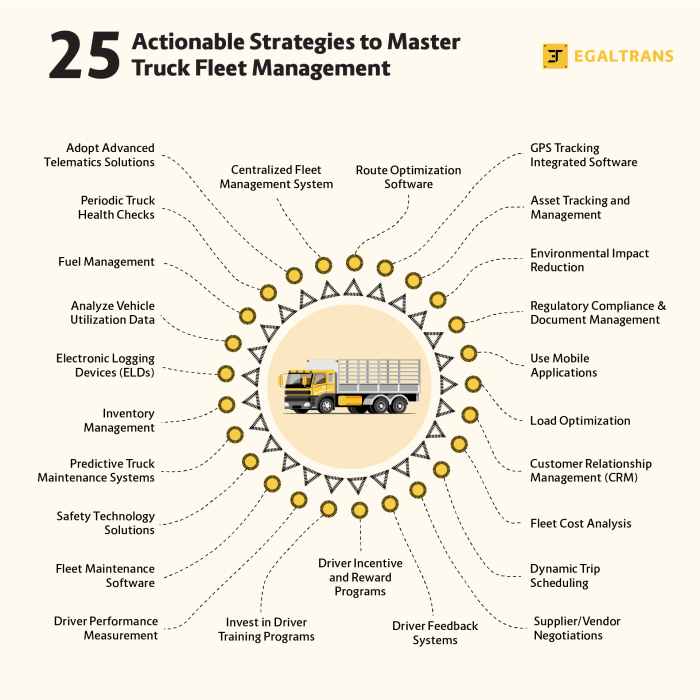
Implementing sustainability practices in maintaining a truck fleet is crucial for reducing environmental impact and operating costs in the long run. By incorporating eco-friendly initiatives, companies can not only contribute to a cleaner environment but also enhance their reputation as socially responsible businesses.
Benefits of Sustainable Maintenance Practices
- Reduced carbon footprint: By using alternative fuels or electric vehicles, truck fleets can significantly lower greenhouse gas emissions.
- Cost savings: Sustainable practices such as proper tire inflation and regular maintenance can improve fuel efficiency, leading to lower operational costs.
- Compliance with regulations: Adhering to environmental regulations helps avoid fines and penalties while ensuring ethical business practices.
Integration of Sustainability into Maintenance Routine
- Switching to alternative fuels: Consider using biodiesel or electric vehicles to reduce reliance on non-renewable resources.
- Proper waste management: Establish protocols for recycling oil, tires, and other materials to minimize waste and pollution.
- Investing in training: Educate drivers and maintenance staff on eco-friendly practices to ensure sustainability is a priority at all levels of the operation.
Training and Skill Development
Training programs for fleet maintenance staff are crucial in ensuring the efficient operation and longevity of a truck fleet. Ongoing skill development plays a key role in improving maintenance practices, keeping up with technological advancements, and promoting sustainability initiatives within the fleet management sector.
Importance of Training Programs
Training programs provide maintenance staff with the necessary knowledge and skills to effectively diagnose and address maintenance issues, prevent breakdowns, and optimize the performance of the fleet. These programs also help in familiarizing staff with new technologies and sustainable practices, ensuring that they stay updated with industry trends.
- Hands-on training sessions on diagnostic tools and equipment
- Workshops on preventive maintenance strategies
- Certification programs for specific maintenance tasks
Ongoing Skill Development
Continual skill development is essential for maintenance staff to stay competitive and efficient in their roles. Regular training sessions and skill enhancement programs can help employees adapt to new technologies, implement best practices, and deliver high-quality maintenance services to the truck fleet.
- Advanced training on electric and autonomous vehicle maintenance
- Specialized training on software systems for fleet management
- Cross-training opportunities for different maintenance tasks
Examples of Training Initiatives
Implementing specific training initiatives can greatly enhance the efficiency of a truck fleet maintenance team. Tailored programs that focus on the unique needs and challenges of the fleet can lead to improved maintenance practices, reduced downtime, and increased overall productivity.
- Simulation training for emergency repair scenarios
- Collaborative workshops with vehicle manufacturers for in-depth product knowledge
- Regular safety training sessions to promote a culture of safety within the maintenance team
Data-Driven Maintenance Strategies
Data analytics plays a crucial role in monitoring the health of a truck fleet. By collecting and analyzing data on various aspects of the vehicles, fleet managers can make informed decisions to ensure optimal performance and reduce downtime.
Predictive Maintenance for Cost Reduction
Predictive maintenance uses data analytics to predict when a truck component is likely to fail, allowing for proactive maintenance before a breakdown occurs. This strategy can significantly reduce costly repairs and minimize unplanned downtime, ultimately improving the overall efficiency of the fleet.
- Monitoring engine performance metrics such as oil pressure, temperature, and fuel consumption to predict potential issues.
- Analyzing tire wear patterns and tread depth to schedule timely replacements and avoid blowouts on the road.
- Tracking brake system performance indicators like brake pad thickness and brake fluid levels to prevent brake failure.
Key Performance Indicators (KPIs) for Maintenance Efficiency
Key performance indicators are essential metrics used to evaluate the effectiveness of maintenance practices within a truck fleet. By tracking these KPIs, fleet managers can identify areas for improvement and implement strategies to enhance maintenance efficiency.
Examples of KPIs:
- Downtime percentage: measuring the amount of time a truck is out of service for maintenance or repairs.
- Preventive maintenance compliance: tracking the percentage of scheduled maintenance tasks completed on time.
- Mean time between failures (MTBF): calculating the average time a truck operates before experiencing a breakdown.
Outsourcing Maintenance Services
Outsourcing maintenance services for a truck fleet can offer numerous benefits compared to managing tasks in-house. It allows companies to focus on their core operations while skilled professionals handle maintenance, resulting in increased efficiency and reduced downtime.
Benefits of Outsourcing Maintenance
- Cost Savings: Outsourcing maintenance services can often lead to lower overall costs due to economies of scale and specialized expertise.
- Access to Specialized Skills: Outsourced providers have a team of experts with specific knowledge in truck maintenance, ensuring high-quality service.
- Reduced Downtime: Professional maintenance providers can optimize schedules and quickly address issues, minimizing downtime for the fleet.
- Flexibility: Outsourcing allows for scalability based on the fleet’s needs, providing the ability to adjust services as required.
Factors to Consider when Outsourcing Maintenance
- Reputation and Experience: Choose a reputable maintenance service provider with a proven track record in the industry.
- Cost Analysis: Evaluate the overall costs of outsourcing versus in-house maintenance to determine cost-effectiveness.
- Service Level Agreements: Clearly define the scope of services, response times, and performance metrics in the agreement.
- Communication: Ensure open communication channels with the outsourced provider to address any issues promptly.
Optimizing Maintenance Schedule and Costs
Outsourcing maintenance services can help optimize the maintenance schedule for a truck fleet by implementing preventive maintenance strategies and leveraging data-driven insights. By partnering with a reliable provider, companies can ensure timely maintenance tasks are performed, reducing overall costs associated with unexpected breakdowns and repairs.
Last Point
In conclusion, mastering the best practices for maintaining a truck fleet in 2025 is crucial for optimizing operations, reducing costs, and ensuring sustainability. By staying informed and embracing innovative solutions, fleet managers can navigate the challenges of the future with confidence and efficiency.
Top FAQs
What are the benefits of adopting sustainable maintenance practices?
Adopting sustainable maintenance practices not only reduces the environmental impact of a truck fleet but also leads to cost savings through improved fuel efficiency and reduced emissions.
How can data analytics help in monitoring fleet health?
Data analytics can provide real-time insights into the performance of fleet vehicles, allowing for proactive maintenance to prevent breakdowns and optimize operational efficiency.
What factors should be considered when choosing to outsource maintenance services?
Factors to consider include the expertise of the outsourcing company, cost-effectiveness, service quality, and the ability to meet maintenance schedules effectively.