
Exploring ways to navigate the tricky terrain of avoiding car insurance rate increases after an accident can be a daunting task. Let’s delve into some effective strategies and insights that can help you steer clear of hefty premium hikes.
Delving into the factors influencing rate adjustments, strategies to minimize increases, understanding insurance policies, and seeking professional advice can all play a pivotal role in safeguarding your financial interests post-accident.
Factors Influencing Car Insurance Rate Increases After an Accident
After an accident, several factors come into play that can influence how much your car insurance rates may increase. Understanding these factors can help you navigate the aftermath of an accident more effectively.
Severity of the Accident
The severity of the accident is a crucial factor that insurance companies consider when adjusting your rates. A minor fender bender may not lead to as significant of a rate increase as a major collision resulting in extensive damage. Insurance companies assess the level of risk associated with insuring a driver based on the severity of past accidents.
Previous Driving History
Your previous driving history plays a significant role in determining how much your insurance rates will increase after an accident. If you have a history of traffic violations or previous accidents, insurance companies may view you as a higher-risk driver.
This increased risk can lead to higher premiums post-accident, as insurers anticipate a greater likelihood of future claims.
Strategies to Minimize Car Insurance Rate Increases After an Accident

After an accident, it’s essential to take proactive steps to minimize the impact on your car insurance rates. Here are some effective strategies to help you navigate this situation:
Negotiate with Insurance Companies
When dealing with insurance companies after an accident, don’t hesitate to negotiate. You can try to demonstrate your loyalty as a long-time customer, highlight any safety features in your vehicle, or emphasize your commitment to safe driving. Requesting a smaller rate increase or exploring other policy options can sometimes lead to a more favorable outcome.
Demonstrate Safe Driving Habits
One way to show insurers that you are a responsible driver is by providing evidence of safe driving habits. This could include installing a telematics device in your car to track your driving behavior, such as speed, braking, and acceleration.
By consistently displaying safe driving practices, you can potentially convince insurers to reconsider any rate hikes.
Consider Taking a Defensive Driving Course
Another effective strategy to minimize car insurance rate increases after an accident is to enroll in a defensive driving course. These courses can help you improve your driving skills, enhance your knowledge of road safety, and demonstrate your commitment to becoming a safer driver.
Some insurance companies even offer discounts to policyholders who complete a defensive driving course, which can help offset any potential rate increases.
Understanding Insurance Policies and Coverage Options
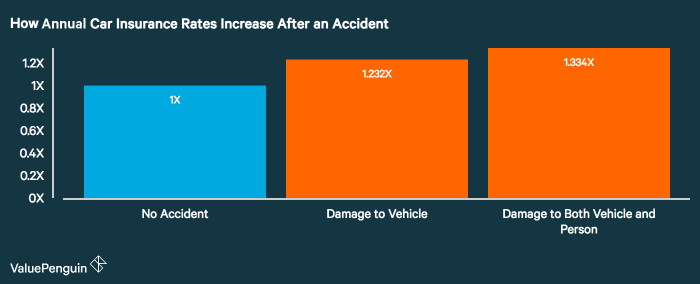
Insurance policies and coverage options play a crucial role in determining how car insurance rates are adjusted after an accident. Understanding the different types of coverage, deductibles, and the impact of at-fault and not-at-fault accidents can help you navigate the aftermath of a collision more effectively.
Types of Coverage and Their Impact
- Liability Coverage: This type of coverage helps pay for the costs of damages or injuries to others in an accident you are responsible for. If you are found at fault for an accident, your liability coverage will come into play, potentially leading to an increase in your insurance rates.
- Collision Coverage: Collision coverage helps cover the costs of repairing or replacing your vehicle if it is damaged in a collision. If you file a claim under collision coverage after an accident, it is likely to result in a rate increase due to the higher risk associated with insuring a vehicle that has been in an accident.
- Comprehensive Coverage: Comprehensive coverage helps cover the costs of damages to your vehicle that are not related to a collision, such as theft, vandalism, or natural disasters. Making a claim under comprehensive coverage may not have as significant of an impact on your rates as a collision claim, but it can still lead to an increase.
Impact of Deductible Amounts
- The deductible is the amount you agree to pay out of pocket before your insurance coverage kicks in to cover the rest of the costs. A higher deductible usually results in lower insurance premiums since you are taking on more of the financial risk in case of an accident.
However, a lower deductible means you’ll pay less out of pocket after an accident but may lead to higher premiums.
At-Fault vs. Not-At-Fault Accidents
- Being at fault in an accident typically leads to a more significant increase in insurance rates compared to being in a not-at-fault accident. Insurance companies consider at-fault accidents as indicators of higher risk, which can result in higher premiums.
Not-at-fault accidents may still impact your rates, but the increase is generally less severe.
Seeking Professional Help and Advice
After an accident, dealing with car insurance rate increases can be overwhelming. Seeking professional help and advice can make the process smoother and ensure you are making informed decisions.
Consulting with Insurance Agents or Brokers
When facing car insurance rate increases after an accident, it’s beneficial to consult with insurance agents or brokers. They can help you navigate the complex world of insurance policies and provide insights on how to minimize rate hikes.
Hiring a Legal Professional
If you are struggling to handle insurance claims and negotiations on your own, hiring a legal professional can be a wise decision. A lawyer specializing in insurance claims can advocate for you and ensure you receive fair treatment from the insurance company.
Reviewing Insurance Policies Regularly
It’s essential to review your insurance policies regularly to understand any coverage changes and potential rate adjustments. By staying informed about your policy details, you can proactively address any issues that may arise after an accident.
Outcome Summary
In conclusion, staying informed and proactive when it comes to managing car insurance rate increases after an accident is key. By implementing the right tactics and being aware of the various factors at play, you can potentially mitigate the impact on your premiums and ensure a smoother claims process moving forward.
FAQ Explained
How can I negotiate with insurance companies to prevent significant rate hikes?
It’s crucial to gather evidence, such as photos and witness statements, to support your case and demonstrate your innocence or minimal fault in the accident.
What role does previous driving history play in influencing insurance premiums after an accident?
Your driving record, including any past accidents or traffic violations, can significantly impact the increase in your insurance rates post-accident.
Is taking a defensive driving course really effective in lowering insurance rates?
Yes, completing a defensive driving course can showcase your commitment to safe driving practices, potentially leading to lower insurance premiums.
How do deductible amounts affect insurance premiums following an accident?
A higher deductible typically results in lower premiums, but it also means you’ll have to pay more out of pocket in the event of a claim.